Vape cartridges are compact, but their disposal is not simple. A cartridge or connected device may combine metal, plastic, electronic parts, and a lithium-ion battery. Some also retain liquid after use. Put together, these materials can make ordinary household bins a poor choice. The details vary by product, so checking the manufacturer’s instructions matters.
The scale of electronic waste offers useful context. UNITAR and the International Telecommunication Union reported that the world generated 62 million tonnes of e-waste in 2022. Just 22.3% was documented as formally collected and recycled, according to The Global E-waste Monitor 2024. Those figures cover all e-waste, not vape cartridges specifically. Still, they show why small devices deserve attention. The U.S. Environmental Protection Agency advises against placing lithium-ion batteries in household trash or curbside recycling, because they can create fire risks during collection and processing. A cartridge may not contain a removable battery, so identify the product before choosing a drop-off point.
How to recycle vape cartridges responsibly starts with knowing what the item contains and checking accepted materials with a local waste agency or a qualified electronics recycler. Avoid dismantling sealed cartridges or pouring leftover liquid down a drain. Small steps help. There is no single recycling route that fits every cartridge, and that uncertainty can be frustrating. Clear labeling and reliable collection options would make responsible disposal easier; until then, careful sorting is a practical place to begin.
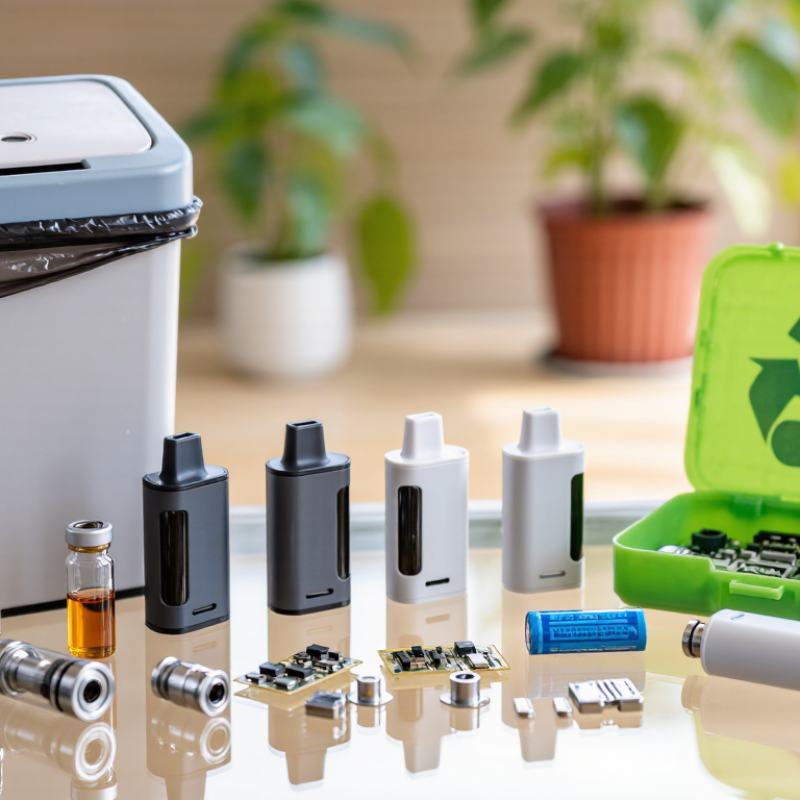
A vape cartridge is a small assembly, not a single material. Its outer body may be glass or plastic, while a metal base connects the cartridge to a device. Inside, a narrow heating element is often made from metal or ceramic. A wick may use cotton, silica, or another porous material to move liquid toward the heater. Small silicone seals help limit leaks. Designs vary, so these parts are not universal.
That mix matters when a cartridge reaches the end of its life. Glass, plastic, metal, and ceramic can require different handling, and leftover liquid may contaminate otherwise recoverable materials. Some cartridges also include parts that are difficult to separate without tools. Please don’t force them apart. A cracked glass tube, sharp metal edge, or damaged seal can create a small but real hazard. It is mixed material. Check local recycling guidance or ask a qualified waste facility whether cartridges are accepted; ordinary curbside bins may not be equipped to process them. Even a materials list can be imperfect, because manufacturers use different designs. Knowing what may be inside is a useful first step, not a guarantee that every component can be recycled.
A discarded vape cartridge can look like a small piece of plastic, but it may still hold liquid residue or contain electronic parts. Left in a curbside bin, it can be crushed during collection. Residue may then leak onto soil or enter runoff, while plastic and metal components add to waste that is difficult to sort. The exact risk depends on the cartridge’s design and what remains inside. Small does not mean harmless.
There is also a fire risk if a cartridge includes a battery. A crushed or damaged battery can overheat, especially when its terminals touch metal in a waste truck or sorting facility. Do not puncture, burn, or rinse a cartridge. If the battery is clearly designed to detach, follow the device instructions; otherwise, keep the unit intact. Check your local waste or recycling service for an accepted drop-off option, such as an electronics or household hazardous-waste collection point. Keep used cartridges away from children and pets, and place them in a secure container until disposal. It is easy to assume one cartridge makes little difference. That assumption is understandable, but repeated small items can create real sorting and safety problems.
A vape cartridge may combine a small battery, metal, plastic, and traces of liquid. In household bins, battery components can be damaged during collection or sorting, creating a fire risk. Residue may also leak onto soil or into water. Responsible recycling sends cartridges to appropriate collection points, where trained handlers can sort materials and manage remaining contents more carefully. That matters. Recovering usable metals and plastics may also reduce demand for new raw materials, though recovery rates vary by facility.
Tips: Check your local waste service or an approved electronics collection point for cartridge instructions. Keep used cartridges away from children and pets. Don’t puncture, dismantle, or rinse them; water can spread residue, and damaged components may be unsafe. If a cartridge is leaking or swollen, ask the collection provider how to handle it before transport.
It is easy to assume that every item marked “recyclable” will be fully recovered. That is not always true. Some facilities cannot accept every cartridge design, so confirming acceptance matters. No system is perfect. Still, keeping cartridges out of ordinary bins gives specialized handlers a better chance to reduce fires, pollution, and wasted materials.
Why Should You Recycle Vape Cartridges Responsibly?
How to Prepare Cartridges for Recycling
Check your local recycling facility’s instructions before preparing a cartridge. Many curbside programs do not accept small electronic parts or cartridges with residue. The Global E-waste Monitor 2024 reports that 62 million tonnes of electronic waste were generated worldwide in 2022, while only 22.3% was documented as formally collected and recycled. Those figures cover all e-waste, not vape cartridges, but they show why careful sorting matters.
Let the cartridge cool, then detach it only if it separates easily without tools. Do not pry it open, puncture it, or rinse it; liquid and sharp parts can create avoidable handling risks. If it is leaking, place it in a sealed, leak-resistant bag and ask the recycler how to proceed. Keep it away from children and pets. Small steps matter.
Tips: Keep cartridges in a sturdy container until drop-off, and don’t mix them with loose household recycling. Follow the facility’s packaging directions, since accepted items vary. It is easy to assume a cartridge belongs in a general e-waste bin, but that may not be true.
| Cartridge Part or Material | Why Responsible Handling Matters | How to Prepare It | Where It May Belong |
|---|---|---|---|
| Used cartridge with liquid residue | Residue may contain nicotine or other substances. Leaks can expose people, pets, or the environment. | Keep it upright in a sealed, leak-resistant container. Do not rinse it, puncture it, or squeeze out the contents. | Ask your local household hazardous waste program or a suitable take-back service how to handle it. |
| Glass or plastic cartridge body | Cartridges can combine several materials, making them difficult for standard recycling systems to sort. | Do not assume the body is accepted in curbside recycling. Leave it assembled unless the receiving program gives different instructions. | Use a collection program that specifically accepts vape cartridges or small electronic components. |
| Metal contacts and heating components | Metal and ceramic parts may be recoverable through specialized processing, but are often too small or mixed with other materials for regular sorting. | Do not dismantle the cartridge with tools. Keep small parts contained to prevent loss or injury. | Follow the instructions of an e-waste or vape-device collection program that confirms acceptance. |
| Attached battery or powered device | Lithium-ion batteries can create fire risks if damaged, crushed, or placed in household recycling or trash. | If the battery is designed to detach, separate it only as directed by the device instructions. Do not remove a built-in battery by force; protect terminals from contact with metal. | Take batteries and battery-powered devices to a battery or electronics collection point that accepts them. |
| Empty packaging and instructions | Packaging may be recyclable, but acceptance depends on its material and local collection rules. | Separate clean paper or cardboard from plastic packaging. Keep anything contaminated with cartridge residue out of ordinary recycling. | Recycle clean packaging only where the local program accepts that material. |
| Cartridge ready for drop-off | Clear identification and safe containment help collection staff handle items appropriately. | Store cartridges securely, keep them away from heat and children, and transport them in a closed container. Do not place loose cartridges in a recycling bin. | Check the collection site’s accepted items and preparation rules before visiting. |
Important: Recycling options vary by location and cartridge design. Contact your local waste authority or collection provider before drop-off, and never put vape batteries in curbside recycling or household trash unless local guidance explicitly allows it.
Finding a suitable drop-off point starts with your local waste services website. Search for “vape cartridge recycling,” “household hazardous waste,” or “small electronics collection” alongside your city or county name. Municipal environmental departments often list approved collection events and permanent sites. Some electronics recyclers or participating retailers may also accept certain parts, but acceptance varies. Call before you go. Ask whether the site takes cartridges, devices, or batteries, and whether they must be separated. A program may accept one item but refuse another.
Check the site’s instructions before packing anything. Keep cartridges and devices intact unless staff specifically request otherwise; don’t open, crush, or dismantle them. If a battery is removable, ask how the program wants it prepared. Some collection points require terminals to be covered, while others provide separate bins. Keep items away from heat and store them securely during transport. Keep it intact. Ordinary curbside recycling bins usually aren’t designed for these mixed materials, so check local guidance rather than guessing. It is easy to assume every electronics drop-off accepts every small device. That assumption can mean an unnecessary trip, and I’d rather verify than leave uncertain items at a counter.
Vape products can contain lithium batteries and nicotine residue, so they should not go in household trash or curbside recycling. Use the chart as a starting point, then confirm what your local program accepts.
How to find a program: Contact your local household hazardous-waste program for a whole device or a cartridge with nicotine residue. Take a removable battery to a battery collection point that accepts its battery type. Do not dismantle a device unless the battery is designed to be removed. Local acceptance rules vary. Guidance: U.S. EPA household hazardous-waste information.
It may contain liquid residue or electronic parts. If crushed, residue can leak, and small components can complicate sorting. Small items still matter.
Check your local program first. Many curbside services do not accept small electronic parts or cartridges with residue. Rules vary locally.
Keep the unit intact unless its battery is clearly designed to detach easily. Follow the device instructions. Do not pry it open.
A damaged battery may overheat if its terminals touch metal in a waste truck or sorting facility. Avoid crushing or puncturing it.
No. Do not rinse, burn, or puncture it. Liquid and sharp parts can create handling risks.
Put it in a sturdy, secure container, away from children and pets. Do not mix it with loose household recycling.
Place it in a sealed, leak-resistant bag and ask the recycler how to proceed. Don’t guess.
The Global E-waste Monitor reported 62 million tonnes of e-waste worldwide in 2022, with 22.3% formally collected and recycled. Those figures cover all e-waste, not cartridges. It is easy to assume a general e-waste bin is suitable, but that may be wrong.
Vape cartridges are made from a mix of materials, often including plastic, glass, and metal, and some may contain small electronic components or traces of liquid. When discarded with ordinary waste, these materials can contribute to pollution, while damaged components or leftover contents may create safety concerns. Keeping cartridges out of household recycling bins also helps prevent contamination of materials that could otherwise be recovered.
How to recycle vape cartridges responsibly starts with checking the instructions of a local waste facility or a dedicated collection program, since accepted items and preparation steps can vary. Keep cartridges intact, avoid puncturing or dismantling them, and do not pour any remaining contents down a drain. Follow the collection program’s guidance for packaging and drop-off. Choosing an appropriate recycling route can support material recovery and reduce the risks associated with improper disposal.

TAV Vape