What Makes a Vape Pen Durable for Global Sourcing?

Time:2026-10-16 Author:Oliver
0%

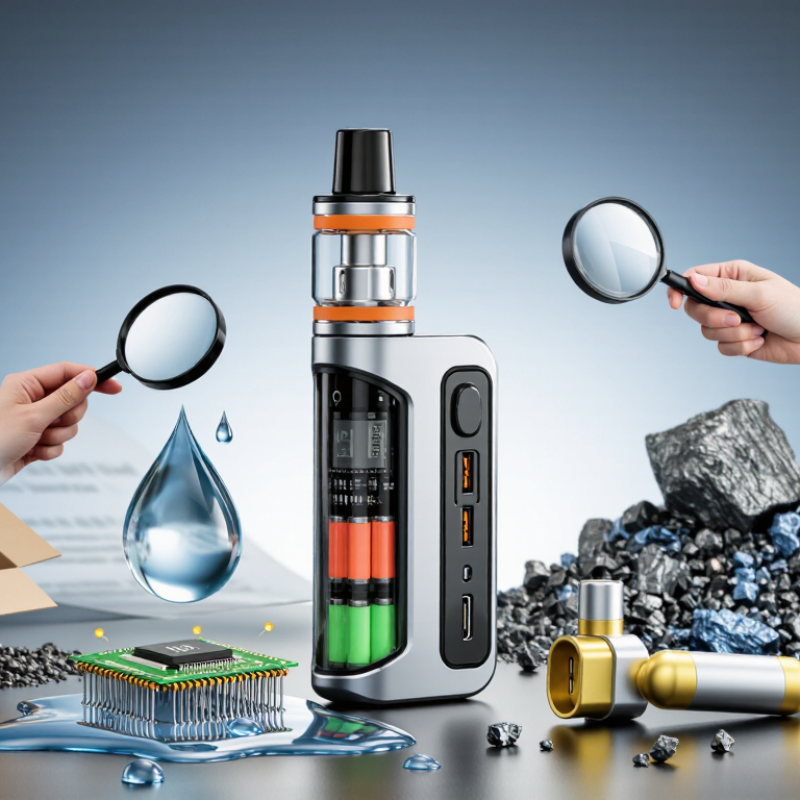
What makes a vape pen durable is not a glossy shell or a higher price. It is the controlled interaction between the battery, heating chamber, seals, and charging circuit. During global sourcing, buyers should inspect cycle-life evidence, drop-test results, thermal protection, and resistance to moisture. Small details matter. A loose charging port can end a product’s life early.

The International Energy Agency’s Global Critical Minerals Outlook 2024 highlights the growing importance of battery performance, supply-chain quality, and material traceability. The European Commission’s battery policy documents also stress safety, durability, and responsible product information. These principles apply to compliant, adult-only vaporizer hardware. They do not replace regional certification requirements. UL 8139 and IEC 62133-2 can help sourcing teams assess electrical and battery safety, where applicable.

Nobel Prize-winning battery scientist M. Stanley Whittingham stated that lithium-ion batteries have “laid the foundation of a wireless, fossil-fuel-free society.” His words point to a practical truth: battery reliability shapes the entire device experience. For a vape pen, that means stable output, protected cells, and predictable charging over repeated use.

Still, no pen is indestructible. Real warehouses are dusty. Delivery boxes are dropped. Users forget charging habits. A durable design should survive these ordinary mistakes without hiding its weaknesses. That is where supplier audits, independent laboratory testing, and transparent technical files become essential. Some sourcing teams focus too heavily on unit cost. That choice may look efficient, but it can create expensive returns later. Durability is measurable, yet imperfect. Good procurement leaves room for both evidence and doubt.

What Makes a Vape Pen Durable for Global Sourcing?

Material Selection: Aluminum Alloys and 304 Stainless Steel for Longer Life

What Makes a Vape Pen Durable for Global Sourcing?

Material Selection: Aluminum Alloys and 304 Stainless Steel for Longer Life

Durability begins with the metal, not the surface finish. Aluminum alloys offer low weight, efficient heat transfer, and clean machining. They also support economical production for large international orders. However, thin aluminum walls can dent during transport. Threads may wear when tolerances are poor.

304 stainless steel provides greater hardness and stronger threaded connections. It resists moisture and many common contaminants found during storage. Yet, it weighs more and can increase machining time. It is also corrosion resistant, not corrosion proof. Poor cleaning, scratches, or harsh environments can still create problems.

In practical sourcing audits, I check material certificates and dimensional reports. I also review wall thickness, thread engagement, and contact-point stability. Drop testing can reveal weaknesses that visual inspection misses. Salt-spray testing offers useful evidence, but it cannot represent every climate. Quality depends on the alloy, design, processing, and inspection discipline.

No material wins every test. A mixed construction may work better. Aluminum can reduce body weight, while 304 stainless steel can reinforce high-stress areas. This approach adds assembly complexity. That trade-off deserves careful review. Suppliers should document alloy grades, heat treatment, surface finishing, and batch consistency. Without traceable records, a premium material can still produce an unreliable device.

Battery Durability: 300–500 Charge Cycles Under IEC 62133 Testing

Battery durability strongly affects the reliability of a vape pen during global sourcing. A credible design should target 300–500 charge cycles under controlled testing conditions.

IEC 62133 provides a recognized safety framework for rechargeable batteries. However, it does not automatically guarantee a specific cycle count. Buyers should request the complete test method, sample size, charging rate, discharge load, and pass-fail criteria.

After repeated cycles, technicians should check capacity retention, internal resistance, heat generation, swelling, and charging stability. A practical test may record battery performance every 50 cycles. This creates a clearer picture than one final measurement.

Small details matter. For example, loose connectors can create intermittent power loss before the cell reaches its rated limit. Housing design also matters because pressure, vibration, and heat may affect battery performance during transport or daily use.

In field experience, results are rarely perfectly uniform. One sample may reach 500 cycles, while another declines earlier because of manufacturing variation.

That is why responsible sourcing requires batch records, traceable test data, and independent verification when risk is high. Suppliers should explain how they control cell matching, protection circuits, charging temperature, and storage conditions.

A basic report is useful, but raw measurements are better. The testing setup may still fail to represent every user environment, so buyers should avoid treating laboratory results as an absolute promise.

Thermal Safety: Protecting Devices Below the 60°C Surface-Temperature Limit

What Makes a Vape Pen Durable for Global Sourcing?

Thermal safety strongly influences long-term device durability. A reliable vape pen should keep its outer surface below 60°C during normal operation. This limit must be checked near the mouthpiece, battery area, and charging port. These zones can feel warm first. Internal heat can also weaken seals, wiring, and battery insulation over time.

Durability requires more than one temperature reading. Engineers should test repeated heating cycles, charging conditions, airflow changes, and warm environments. Sensors should record peak temperatures, not only average results. A protective cutoff can reduce overheating risks, but it cannot replace careful hardware design. In practice, testing may reveal uneven heat around small metal parts. That detail is easy to miss. It deserves review before large-scale sourcing.

Tips: Request thermal test records from suppliers. Check the testing method, ambient temperature, device settings, and sensor locations. Inspect samples after repeated cycles for discoloration, loose parts, or unusual odor. Ask for production consistency data, because one safe sample proves very little. Specifications may look complete, yet real-world handling can expose gaps. Recheck results whenever materials, battery cells, or charging components change.

Ingress Protection: Using IP54–IP67 Ratings for Dust and Moisture Resistance

A durable vape pen begins with controlled exposure, not a high-looking specification. Under IEC 60529, an IP54 enclosure offers limited dust protection and resistance to water splashes. It suits controlled indoor handling, but it may struggle in heavy rain or dusty transport areas. IP65 provides dust-tight protection and resistance to low-pressure water jets. IP66 adds stronger water-jet resistance. IP67 supports temporary immersion, usually up to one metre for 30 minutes.

The number matters. So does the test method. A sourcing team should request test reports, sample conditions, and production inspection records. Check seals around the charging port, control interface, cartridge connection, and housing joints. A small gap near a button can defeat an otherwise strong enclosure. Dust can settle there like flour. Moisture can follow the same path.

IP67 does not automatically confirm high-pressure jet resistance. For demanding environments, dual testing may be necessary. Samples should face repeated assembly, temperature changes, vibration, and port cycling. One test is not enough. In practice, early samples may pass immersion but fail after repeated charging-port use. That weakness deserves attention. Suppliers should define acceptable seal compression, material changes, and retesting rules before mass production. A rating is useful evidence, not a lifetime promise.

What Makes a Vape Pen Durable for Global Sourcing? - Ingress Protection: Using IP54–IP67 Ratings for Dust and Moisture Resistance

IP Rating Dust Protection Moisture Protection Standardized Test Meaning Potential Sourcing Benefit Important Limitation
IP54 Protected against dust in quantities that could interfere with normal operation. It is not fully dust-tight. Protected against water splashing from any direction. The enclosure is tested for limited dust ingress and splashing water under the applicable test conditions. A practical baseline for everyday handling, light dust exposure, and accidental splashes. It is not designed for water jets, temporary immersion, or heavy dust environments.
IP55 Protected against dust in quantities that could interfere with operation; not fully dust-tight. Protected against water jets projected from any direction. The enclosure is evaluated against limited dust ingress and water jets using standardized methods. Offers more resistance to cleaning splashes and outdoor exposure than IP54. A water-jet rating does not automatically mean the product is suitable for immersion.
IP56 Protected against limited dust ingress that must not interfere with normal operation. Protected against powerful water jets from any direction. The enclosure is tested against limited dust ingress and stronger water jets than those used for IP55. Useful where products may encounter stronger sprays, rain, or demanding handling conditions. It does not certify protection against temporary or continuous water immersion.
IP65 Dust-tight; no dust is expected to enter the enclosure during the specified test. Protected against water jets from any direction. The enclosure is tested for complete dust protection and water-jet resistance. A strong option for dusty logistics routes, outdoor use, and frequent splash exposure. Water-jet resistance should not be interpreted as submersion protection.
IP66 Dust-tight; no dust is expected to enter the enclosure during the specified test. Protected against powerful water jets from any direction. The enclosure is tested for complete dust protection and powerful water-jet resistance. Provides a higher margin for harsh outdoor handling and exposure to strong sprays. The rating alone does not confirm resistance to immersion, chemicals, impact, or heat.
IP67 Dust-tight; no dust is expected to enter the enclosure during the specified test. Protected against temporary immersion in water under the specified test conditions. Typically includes temporary immersion up to 1 metre for up to 30 minutes, subject to the applicable standard and test setup. Best suited to products requiring dust-tight construction and added protection against accidental drops into water. It does not automatically cover powerful water jets or continuous immersion; verify the test specification.
Global sourcing check: An IP rating describes enclosure protection against solid particles and water under defined laboratory conditions. It does not by itself confirm battery safety, drop resistance, seal durability, chemical resistance, temperature performance, or long-term reliability. For supplier verification, request the exact test report, sample identification, test date, enclosure configuration, and confirmation that all openings, charging interfaces, buttons, and removable parts match the production design.

Global Quality Control: UN 38.3, RoHS, and ISO 9001 Compliance Requirements

What Makes a Vape Pen Durable for Global Sourcing?

Durability begins with controlled design, not a thicker shell. A sourcing team should request UN 38.3 evidence for every lithium battery configuration. The UN Manual of Tests and Criteria covers altitude, thermal, vibration, shock, external short circuit, impact, overcharge, and forced discharge tests. These checks expose weak welds, loose terminals, and unsafe protection circuits before international transport. Ask for laboratory reports, sample identification, and matching production records. A certificate without traceable samples is only paper.

RoHS compliance also affects long-term reliability. The European Commission restricts ten substances, including lead, mercury, cadmium, and several phthalates. Suppliers should provide material declarations, XRF screening, and controlled component lists. ISO 9001 adds process discipline. The ISO Survey 2022 reported more than 1.2 million ISO 9001 certificates worldwide, showing how widely quality systems are adopted. Yet certification alone cannot guarantee every batch. Incoming inspection should check battery resistance, charging behavior, connector alignment, and drop performance. Keep records by lot.

Small details matter. A loose button becomes a return. A weak seal invites contamination. Global quality is never finished. Teams sometimes trust documents too quickly, and that is a costly mistake.、】【

FAQS

How many charging cycles should a rechargeable vape pen target?

A practical target is 300–500 controlled charging cycles. Performance may vary between units. One sample may reach 500 cycles, while another declines earlier. Manufacturing variation matters.

Does IEC 62133 guarantee 500 charging cycles?

No. IEC 62133 provides a battery safety framework, not a guaranteed cycle count. Buyers should request the full test method, sample size, charging rate, and pass-fail criteria. A certificate alone is incomplete evidence.

What should technicians measure during battery cycle testing?

They should record capacity retention, internal resistance, heat generation, swelling, and charging stability. Testing every 50 cycles creates a clearer performance record. Raw measurements are more useful than one final result.

Which battery details should sourcing teams request?

Ask for batch records, traceable test data, cell-matching controls, protection-circuit details, charging temperatures, and storage conditions. Independent verification helps when the sourcing risk is high. Do not treat laboratory results as absolute promises.

What does an IP54 enclosure protect against?

IP54 offers limited dust protection and resistance to water splashes. It may suit controlled indoor handling. Heavy rain and dusty transport areas can still cause problems. The rating has limits.

How do IP65, IP66, and IP67 differ?

IP65 provides dust-tight protection and low-pressure water-jet resistance. IP66 withstands stronger water jets. IP67 supports temporary immersion, commonly up to one metre for 30 minutes. IP67 does not automatically confirm high-pressure jet resistance.

Which enclosure areas need close inspection?

Check seals around the charging port, control interface, cartridge connection, and housing joints. A tiny gap near a button can defeat strong protection. Dust may settle there like flour. Moisture can follow the same path.

Are ingress-protection test results permanent?

No. Repeated assembly, temperature changes, vibration, and charging-port use may weaken seals. One sample can pass immersion but fail later. Suppliers should define seal compression, material changes, and retesting rules before mass production.

Conclusion

What makes a vape pen durable depends on the quality of its materials, battery, thermal protection, and manufacturing controls. Aluminum alloys and 304 stainless steel can provide a strong, corrosion-resistant structure that withstands daily handling. A dependable battery should support approximately 300–500 charge cycles when evaluated under IEC 62133 testing conditions, while effective temperature management helps keep the device surface below the 60°C safety limit during normal operation. These features can reduce premature wear and improve long-term reliability.

Protection from the environment is also important for global sourcing. An IP54 rating may help resist limited dust and moisture exposure, while IP67 offers a higher level of protection for demanding conditions. Consistent production should be supported by documented quality systems and relevant requirements, including UN 38.3 transport testing, RoHS material restrictions, and ISO 9001 quality management. Together, these criteria create a practical framework for evaluating durable, compliant, and dependable devices across international supply chains.

Oliver

Oliver

Oliver is a seasoned marketing professional with a wealth of expertise in driving brand awareness and engagement. With a deep understanding of our company's product offerings, he consistently delivers high-quality content that enriches our professional blog. His insights not only shed light on......