How to troubleshoot vape devices at home begins with caution, not guesswork. A device that will not fire may have a simple connection problem. It may also show signs of battery damage, liquid leakage, or internal failure. Treat every symptom seriously. Stop using the device if it becomes unusually hot, smells burnt, swells, crackles, or leaks near the charging port. Never open the battery compartment or attempt electrical repairs.
Dr. Konstantinos Farsalinos, a physician and vaping researcher, has stated, “E-cigarettes are not harmless, but they are much less harmful than smoking.” That distinction matters here. Safer troubleshooting means avoiding smoke exposure while respecting basic electrical safety. Use the manufacturer’s instructions, check the charging cable for splits, and clean visible residue with a dry cotton swab. Do not insert metal objects into the connector. Do not charge a damaged device unattended. Keep it away from children, pets, water, and direct sunlight.
This guide explains How to troubleshoot vape devices at home through careful observation and simple checks. It does not encourage risky modifications or unauthorized repairs. Some problems remain unclear. That is normal. If a device still fails after safe checks, replace it or contact the manufacturer. A low-cost fix is never worth a burn, fire, or damaged battery. Real experience teaches humility: sometimes the safest solution is stopping.
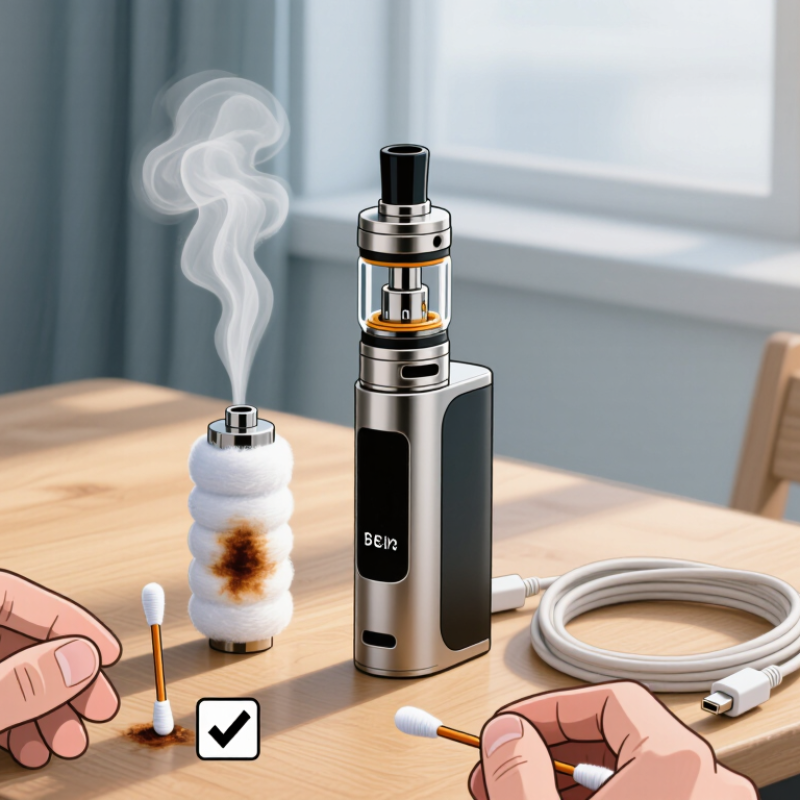
Start with the device’s visible condition. A cracked casing, swollen battery, burnt smell, or unusual heat means stop using it immediately. Do not press the button repeatedly to “test” it. Place the device on a nonflammable surface, away from fabric and children. The U.S. Fire Administration’s Electronic Cigarette Fires and Explosions report documented 195 incidents and 133 acute injuries between 2009 and 2016. Battery damage can become dangerous quickly. Never open the battery compartment or attempt an improvised repair.
For weaker vapor or no response, check simple causes first. Confirm the battery has charge, then inspect the cable and charging port for bent pins, liquid, or debris. Wipe external contacts with a dry cloth only. Check that airflow openings are not blocked by lint or residue. A leaking cartridge can contaminate the connector and cause intermittent firing. Stop if liquid reaches the battery area. Use only the charging method specified in the device’s instructions, and do not charge overnight or in a vehicle’s heat. Replace worn parts according to the manual. I have found that rushed troubleshooting causes more mistakes than the original fault. If the device remains hot, leaks, smells unusual, or behaves unpredictably, disconnect it and contact the manufacturer’s qualified support channel or a certified electronics technician. Dispose of damaged batteries through an approved local collection service, not household rubbish.
When a vape device stops working, check power before assuming the battery has failed. Press the power button once and watch for an indicator light. If nothing happens, inspect the cable, adapter, and charging port for lint, moisture, or bent contacts. Disconnect everything before cleaning. Use a dry cotton swab, never a metal tool. A loose cable can look like a dead battery.
Charge the device on a clear, non-flammable surface away from heat and water. Use the supplied or approved charging equipment, and avoid damaged cables or loose adapters. Do not charge overnight or leave the device unattended. Stop immediately if it becomes unusually hot, smells strange, swells, leaks, or makes a crackling sound. That is not normal.
For devices with removable batteries, turn the device off before checking the connection. Inspect the battery wrap for tears, dents, or exposed metal. Confirm the battery sits in the correct direction and that the contact points are clean and dry. Never force a battery into place. Do not open a sealed device or attempt internal repairs. I have found that repeated button presses often hide a simple connection problem, but guessing can create a bigger one. If the battery or housing looks damaged, stop using the device and seek qualified repair or approved battery-recycling guidance.
Checking power, charging, and battery connections starts with understanding common voltage reference points for a single-cell lithium-ion battery.
A fully charged single-cell lithium-ion battery is commonly around 4.2 V, its nominal voltage is about 3.7 V, and many protected devices stop operating near 3.0 V. Actual limits vary by device. Do not use a battery that is swollen, leaking, damaged, unusually hot, or has a torn wrapper. Use the correct charger and never bypass built-in safety protections.
How to Troubleshoot Vape Devices at Home Safely
Turn the device off before inspecting any part. Remove the pod or tank with dry hands, then check for cracks, loose seals, or unusual moisture. A small leak can travel into the connection area and cause poor performance. Wipe the contacts gently with a dry cotton swab. Do not use a damaged pod or tank.
Check the coil for dark buildup, a burnt smell, or uneven wetting. If the taste is burnt, replace the coil instead of continuing to use it. A new coil may need several minutes to absorb liquid before operation. I have sometimes rushed this step and mistaken dry cotton for a faulty device. That was an avoidable mistake. Follow the device’s instructions for compatible coil resistance and filling levels.
Inspect the airflow openings for lint, dust, or dried residue. Blocked airflow can create tight draws, gurgling, or weak vapor. Clear the openings carefully without pushing objects inside. If liquid enters the central airflow tube, stop using the device and clean only as the instructions allow. Never operate equipment with a swollen, cracked, or overheating battery. Keep spare batteries and liquids away from heat, children, and pets. If the problem remains after these checks, stop troubleshooting and seek qualified service rather than opening the battery compartment.
| Area to Inspect | Common Symptom | Likely Cause | Safe Home Check | Recommended Action | Stop Using If |
|---|---|---|---|---|---|
| Pod or Tank Connection | Device does not recognize the pod or produces no vapor. | Loose connection, e-liquid residue, or incorrectly seated pod. | Turn the device off, remove the pod or tank, and inspect the contact points for moisture or debris. | Wipe the contacts gently with a clean, dry cotton swab. Reinstall the pod firmly without forcing it. | The connection is bent, damaged, excessively wet, or visibly corroded. |
| Pod or Tank Leakage | E-liquid appears around the mouthpiece, base, or device contacts. | Damaged seal, loose component, overfilled tank, or condensation. | Keep the device upright and check the pod, tank glass, seals, and fill plug for cracks or gaps. | Clean the exterior with a dry cloth and replace damaged seals, pods, or tanks according to the product instructions. | Liquid reaches the battery area, the tank is cracked, or leakage continues after replacement. |
| Coil Condition | Burnt taste, harsh vapor, darkened e-liquid, or reduced flavor. | Worn coil, insufficient e-liquid, or repeated use at excessive power. | Check the coil for discoloration and confirm that the e-liquid level is above the coil’s intake openings. | Replace the coil or pod when necessary. After replacement, allow the wick to absorb e-liquid before vaping. | The coil is visibly damaged, the device overheats, or a burnt taste remains after replacement. |
| Coil Installation | Gurgling, spitting, leaking, or inconsistent vapor. | Coil is loose, cross-threaded, incorrectly fitted, or flooded with e-liquid. | Turn the device off and confirm that the coil is seated straight and tightened only as directed. | Remove excess liquid from the mouthpiece and connection area. Refit or replace the coil if needed. | The coil cannot be installed securely or the tank continues to flood. |
| Airflow Openings | Tight draw, weak vapor, or the device does not activate when inhaling. | Blocked airflow slots, condensation, lint, or debris. | Inspect the airflow openings and mouthpiece under good lighting. | Clean only the exterior openings with a dry, soft tool or cloth. Do not insert metal objects or liquid cleaners. | Airflow remains blocked or the device activates by itself. |
| Airflow Adjustment | Vapor feels unusually hot, harsh, or weak. | Airflow setting does not match the coil or personal draw style. | Check whether the airflow control is fully or partially closed and review the device instructions. | Make small adjustments and use the power range recommended for the installed coil. | The device becomes excessively hot or produces an unusual smell. |
| Battery and Charging | Device will not charge, loses power quickly, or becomes warm while charging. | Worn battery, damaged cable, dirty port, or unsuitable charging equipment. | Inspect the battery housing, charging port, cable, and connector for damage. Use the supplied or manufacturer-approved charging method. | Charge on a nonflammable surface while supervised. Disconnect when fully charged and keep the port dry. | The battery is swollen, dented, leaking, unusually hot, or has a damaged wrap or casing. |
| Button or Auto-Draw Sensor | Button sticks, fires unexpectedly, or the auto-draw function fails. | Condensation, e-liquid contamination, blocked sensor, or internal damage. | Turn the device off and inspect the button and mouthpiece for residue or moisture. | Clean the exterior gently and keep the device upright. Follow the user manual for reset instructions. | The device fires without pressing the button, cannot be switched off, or becomes hot while idle. |
| E-Liquid Level | Dry hits, burnt taste, or unstable vapor production. | Reservoir is too low or the wick has not absorbed enough liquid. | Check the level before use and keep the coil intake openings covered with e-liquid when the device design requires it. | Refill only through the designated fill port and avoid overfilling. Replace the coil if it has been burnt. | The reservoir or fill seal is cracked, leaking, or cannot close securely. |
| Overall Device Safety | Persistent malfunction, unusual odor, repeated overheating, or visible damage. | Internal electrical or battery fault that cannot be safely diagnosed at home. | Power the device off, disconnect it from charging, and place it away from flammable materials. | Consult the product instructions or a qualified repair professional. Dispose of damaged batteries through an appropriate recycling or hazardous-waste service. | There is smoke, hissing, swelling, fire, severe heat, chemical leakage, or any sign of thermal runaway. |
How to Troubleshoot Vape Devices at Home Safely
Leaks often begin with a loose tank connection, worn seal, or overfilled chamber. Turn the device off and remove the battery, if it is removable. Wipe the connection with a dry cotton swab. Check the seal for cracks, flattening, or sticky residue. Do not tighten parts aggressively. That can damage the threads. If liquid reaches the battery area, stop using the device immediately. I once blamed a loose cap, but the real problem was a damaged seal.
Weak vapor can result from a low battery, blocked airflow, or an old heating component. Charge the device only with its intended cable and on a clear, stable surface. Inspect the airflow openings for dust or residue. Clean only the exterior, and never pour water into the device. If the heating component looks dark, tastes burnt, or produces uneven vapor, replace it according to the user manual. Small changes matter.
Firing issues require extra caution. Confirm that the power button is not stuck and that the tank is seated correctly. If the device activates without pressing the button, disconnect it from power and stop using it. Never open the battery housing or probe internal wiring. That is not a safe home repair. Persistent heat, swelling, hissing, or a chemical smell requires professional service or proper battery disposal. My troubleshooting notes are not perfect, so the manual should remain the final authority.
A vape device may stop working because of a blocked airway, weak connection, or depleted battery. Check only simple, external issues. Wash and dry your hands, remove the charging cable, and inspect the casing, mouthpiece, and connector under good light. Do not insert metal tools or open the battery compartment. A reset can feel reassuring, but it proves little.
Stop troubleshooting immediately if the device becomes hot, swells, leaks, smells sweet or chemical-like, hisses, or shows cracks. Move away from curtains, paper, and bedding if you can do so safely. Never charge a damaged device or leave it charging overnight. The U.S. Fire Administration documented 195 vape-related fires and explosions from 2009 to 2016, including 133 acute injuries and 38 severe injuries. That record makes “one more test” a poor gamble.
Leave the device alone if smoke appears. Evacuate the area and contact emergency services. Do not puncture, crush, or handle a smoking battery. If liquid reaches your skin, rinse thoroughly; seek medical advice after eye exposure or breathing discomfort. Follow local hazardous-waste guidance for disposal, since ordinary household bins can create fire risks. The National Academies also reported that vape aerosols may contain potentially toxic substances, so unusual taste, chest pain, coughing, or dizziness deserves medical attention. Even careful users miss warning signs sometimes. Stop early.
Stop if the casing cracks, battery swells, or the device becomes unusually hot. Do not test it repeatedly. Place it on a nonflammable surface, away from children and fabrics.
Confirm the battery has charge. Inspect the cable, charging port, and airflow openings for damage or debris. Clean external contacts with a dry cloth only. Small changes matter.
Turn the device off and remove a removable battery. Wipe the connection with a dry cotton swab. Check for cracked seals, sticky residue, or loose connections. Do not overtighten parts.
Stop using the device immediately. Do not charge it or press its button. Place it away from paper, bedding, and curtains if safe. Seek qualified service or follow local disposal guidance.
A stuck button, poor connection, or internal fault may cause unintended firing. Disconnect it from power and stop using it. Never open the battery housing or probe internal wiring.
No. Do not open the compartment, puncture the battery, or use improvised repairs. Battery damage can worsen quickly. My troubleshooting notes are not perfect; the manual remains the final authority.
Use only the specified charging method and intended cable. Charge on a clear, stable surface. Do not charge overnight or inside a hot vehicle. Never charge a damaged device.
Seek qualified service for persistent heat, swelling, hissing, chemical smells, or unpredictable behavior. If smoke appears, leave the area and contact emergency services. Rinse skin after liquid exposure. Seek medical advice for eye exposure, breathing discomfort, chest pain, coughing, or dizziness.
How to troubleshoot vape devices at home begins with identifying the problem calmly and avoiding unsafe experimentation. Check whether the device has power, whether the charger and battery connections are clean and secure, and whether the battery shows signs of swelling, overheating, damage, or unusual odor. Never use a damaged battery or leave a device charging unattended. If the device does not respond, disconnect it and review its basic operating instructions.
Next, inspect the pod or tank for cracks, loose seals, excess liquid, blocked airflow, or a worn coil. Leaks, weak vapor, and firing problems may result from poor connections, low power, flooding, or an improperly fitted component. Clean only the accessible exterior areas with a dry material, replace damaged or worn parts, and avoid forcing connections. If the device becomes hot, leaks heavily, produces a burning smell, behaves unpredictably, or continues malfunctioning, stop troubleshooting, place it somewhere safe, and seek qualified assistance or follow appropriate disposal guidance.

TAV Vape