Choosing among China’s vape starter kits requires more than comparing prices or sleek finishes. Small details matter. A dependable kit should have clear operating instructions, a battery protection system, and charging specifications that match the supplied cable. Check the tank’s stated capacity, coil compatibility, airflow adjustment, and how easily its parts can be cleaned. These details affect everyday handling, but product listings do not always explain them well.
What features matter in a vape starter kit depends on the intended adult user and the product’s verified specifications. A simple control layout may be easier to understand than one crowded with settings. A secure mouthpiece and well-fitted tank can help reduce leaks, though no design guarantees a mess-free experience. Look for consistent labeling, accessible replacement parts, and supplier documentation that can be checked independently. When comparing products made in China, treat “best” as a question of fit and evidence, not a universal ranking. Photos alone are not enough. Ask for the manual and confirm the exact model. Battery claims deserve particular care; vague wording should prompt questions, not assumptions. Even a well-reviewed kit may feel awkward in the hand, or require more cleaning than expected. That is worth considering. This guide examines practical features, safety information, build quality, and value, while noting where available claims remain uncertain. Always check applicable local requirements before making a decision.
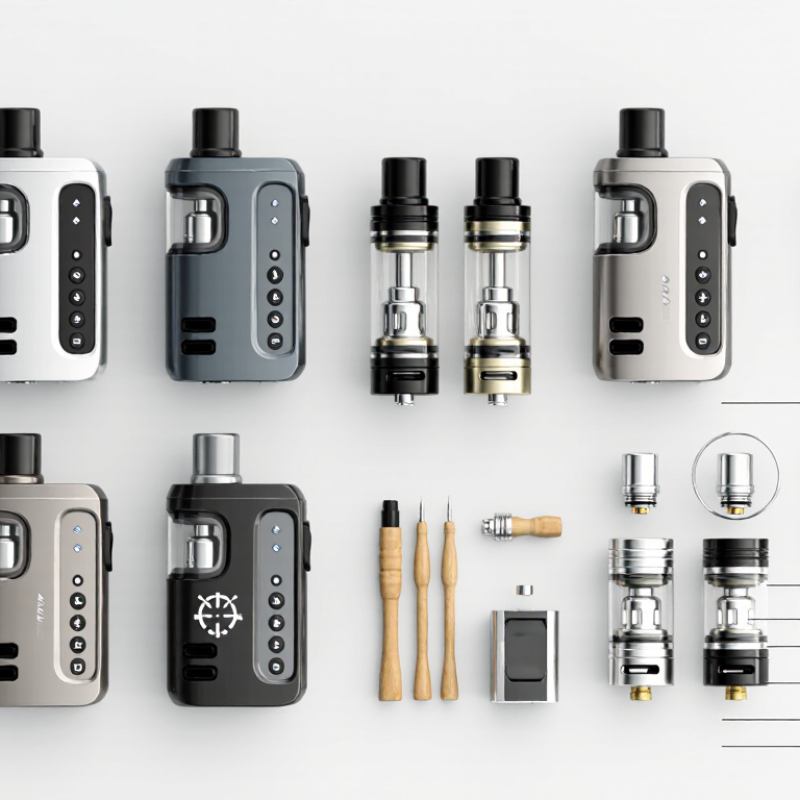
A vape starter kit is a coordinated set of components designed to work together, rather than a device alone.
It commonly includes a rechargeable battery, a pod or tank, a compatible coil, a charging cable, and basic instructions. Some kits arrive without e-liquid, so the package contents should be checked carefully.
Small details matter: a spare coil, clear fill markings, and a readable manual can make the first setup less confusing.
The category varies. A pod kit uses a compact replaceable or refillable pod, while a tank kit usually has a separate reservoir and replaceable coil.
Grand View Research estimated the global e-cigarette and vape market at USD 28.17 billion in 2023; that figure covers the wider market, not starter kits alone.
It shows why product labels can cover very different designs. That distinction matters.
For a practical comparison, check battery capacity, charging type, refill method, replacement-part availability, and whether the instructions explain safe handling.
A larger battery may mean less frequent charging, but also a heavier device. No kit is perfect.
Even clear specifications can leave questions about long-term part availability, so verify those details before purchase.
China-made vape starter kits are developed through close coordination between product designers, component suppliers, and assembly teams. Early prototypes test the device’s shape, button placement, airflow, and charging position. A small change matters: a port placed too close to an edge can make the casing feel awkward in the hand. Designers also consider how a pod or tank fits, how easily parts can be cleaned, and whether the instructions are clear.
Production often involves molded casings, electronic components, battery installation, and final assembly. Quality checks may include charging tests, airflow checks, and inspections for loose fittings or visible damage. These steps help identify problems, but they do not make every unit flawless. Small details matter. Supplier materials and factory processes can vary, so consistency needs ongoing attention. A neat sample is not enough; batches should be checked under repeatable conditions.
Good design balances portability with durability and straightforward operation. Yet trade-offs remain. A lighter casing may feel less sturdy, while tighter airflow may not suit every adult user. Clear specifications and careful inspection are more useful than polished packaging when assessing how a kit is made.
A useful starter kit should make routine checks simple. Look for clear battery-status indicators, adjustable output, and a pod or tank with a visible liquid window. These details help users notice low power or low liquid before performance changes. A modest, well-labeled control range is often more useful than many settings. Keep it simple.
Battery protection deserves close attention. The U.S. Fire Administration’s report, Electronic Cigarette Fires and Explosions in the United States, 2009–2016, documented 195 reported incidents and 133 injuries. Those figures are not a measure of risk per device, but they show why short-circuit protection, clear charging instructions, and a reputable charger matter. Avoid kits with vague safety information or damaged batteries.
Comfort and upkeep matter, too. A mouthpiece should feel secure, while a refill opening should be easy to reach without spilling onto your fingers. Replaceable coils can reduce waste, but only if replacements are clearly identified and readily available. Check the manual for cleaning guidance and compatible parts. Honestly, advertised battery capacity alone can mislead; real runtime also depends on power settings and use. Choose a kit with understandable specifications, accessible support, and parts you can identify without guesswork.
| Feature | What to Compare | Why It Matters | Practical Check |
|---|---|---|---|
| Regulatory compliance | Applicable market approvals, labeling, and product documentation | Requirements differ by market and can affect whether a product may legally be sold. | Check current local rules and verify documentation through official sources. Mainland China has national e-cigarette standards and sales restrictions. |
| Battery and charging | Battery capacity, charging connection, and stated charging guidance | Battery capacity affects how often charging may be needed; charging arrangements affect everyday convenience. | Compare published specifications rather than relying on an unqualified “all-day” claim. Follow the supplied charging instructions. |
| Pod and coil design | Replaceable pod, replaceable coil, or integrated pod-and-coil unit | The design determines which parts need replacing and whether compatible spares must be available. | Confirm the exact compatible replacement parts and their availability before purchase. |
| Refilling and liquid compatibility | Refill method, stated liquid compatibility, and any use restrictions | A clear refill process can reduce spills; using unsuitable liquid may impair device operation. | Read the device instructions and use only liquids permitted by the manufacturer and applicable law. |
| Ease of use | Number of controls, setup steps, and clarity of indicators | A straightforward interface can make basic operation and troubleshooting easier. | Look for understandable instructions and clearly explained battery or fault indicators. |
| Leak and spill management | Pod seals, filling-port closure, and manufacturer care guidance | Liquid leakage can create mess and may affect device contacts or nearby items. | Treat leak-resistance claims as design features, not a guarantee; inspect seals and follow filling instructions. |
| Safety protections | Documented protections, warnings, and battery-use instructions | Electronic devices and lithium-ion batteries require proper handling and charging. | Check the product manual for protection details. Do not use a damaged device or battery, and do not leave charging unattended. |
| Ongoing cost and parts access | Replacement pod or coil cost, availability, and expected replacement guidance | The initial kit price does not include the cost of consumable parts over time. | Compare the cost and local availability of compatible parts, not just the starter-kit price. |
| Nicotine and age restrictions | Nicotine content, package information, and legal age requirements | Nicotine is addictive, and products containing it are not suitable for non-users or minors. | Check the label and current local restrictions. Keep all e-cigarette products away from children and pets. |
Note: Specifications and availability vary by model and market. This comparison is informational and is not a product endorsement.
Battery life is more than a large number printed on a box. Check the battery capacity and whether it suits your typical day. A person using a device occasionally may need less capacity than someone using it frequently. Charging time matters, too. A short commute can make a slow recharge inconvenient. Look for clear charging instructions and built-in protections against overheating or overcharging. Never use a damaged battery or an incompatible charger. Small details count.
Ease of use depends on clear controls, readable indicators, and simple cleaning. A device with confusing settings may be frustrating, even if its specifications look impressive. Keep it simple. Compatibility needs equal care: replacement components must match the device’s exact model and stated specifications. Similar-looking parts are not always interchangeable. Check the manual before buying replacements, and avoid improvised combinations. A tidy spec sheet can still leave questions unanswered. Battery claims also vary with usage, temperature, and age, so real-world performance may differ. These comparisons help identify practical trade-offs, not prove that any vape product is risk-free.
When comparing vape starter kits, treat local compliance as a safety filter, not paperwork. The WHO’s 2023 Report on the Global Tobacco Epidemic found that 34 countries had banned e-cigarette sales. It also reported that 74 countries had no specific regulation. Rules differ sharply. That matters at checkout. A kit permitted in one market may not meet another’s requirements for labeling, age controls, or product testing. Check your national health regulator’s current guidance. Confirm that the seller provides clear instructions and charger information.
In the EU, the Tobacco Products Directive limits nicotine concentration to 20 mg/ml and tank capacity to 2 ml. These limits are regional, not global. Check that a kit’s stated capacity and product compatibility fit local rules. Look for required child-resistant packaging and clear warnings. Battery protection matters too: avoid damaged cells and incompatible charging cables. A compliance mark is useful, but it cannot guarantee every unit is defect-free. Keep the receipt and model details. Small step, often overlooked. A polished box alone does not prove independent testing; ask for conformity or test documentation when available.
Look for clear battery indicators, adjustable output, and a visible liquid window. Simple controls help. More settings are not always better.
Short-circuit protection and clear charging instructions can help reduce avoidable hazards. Use a compatible charger, and never use a damaged battery.
Compare capacity with your usual use and check the stated charging time. A large number can look reassuring, but it does not tell the whole story.
A secure mouthpiece and an easy-to-reach refill opening make routine upkeep less fiddly. Check the manual for cleaning instructions and compatible parts.
Not necessarily. Similar-looking parts may not fit or meet the device’s specifications. Check the exact model in the manual before buying replacements.
Check current guidance from your national health regulator. Requirements for labeling, product testing, and packaging can vary by location.
No. A mark can be useful, but it does not prove every unit is free from defects. Keep the receipt and model details.
Real battery life can change with settings, temperature, and age. Ask for available test documentation, too. A polished box proves little.
A vape starter kit brings together the basic components a new adult user needs in one simple package, such as a device, a rechargeable battery, and compatible replacement parts. China-made kits are typically developed through a process that balances product design, component selection, assembly, and quality checks. When considering What features matter in a vape starter kit, focus on dependable construction, clear controls, comfortable handling, and straightforward maintenance rather than unnecessary complexity.
Battery capacity affects how often the device needs recharging, while charging time and visible battery indicators can make daily use more convenient. Check that replacement parts are easy to identify and compatible with the device, and look for instructions that explain setup and care clearly. Safety features, reliable materials, and consistent quality control are also important. Before choosing a kit, confirm that it meets applicable safety standards and local regulations, since requirements can vary by location.

TAV Vape